Shipyard
From the many ships at pier during WWII to the construction of Crane 11, see how our shipyard has changed over the years.
-
Shipyard Modernization
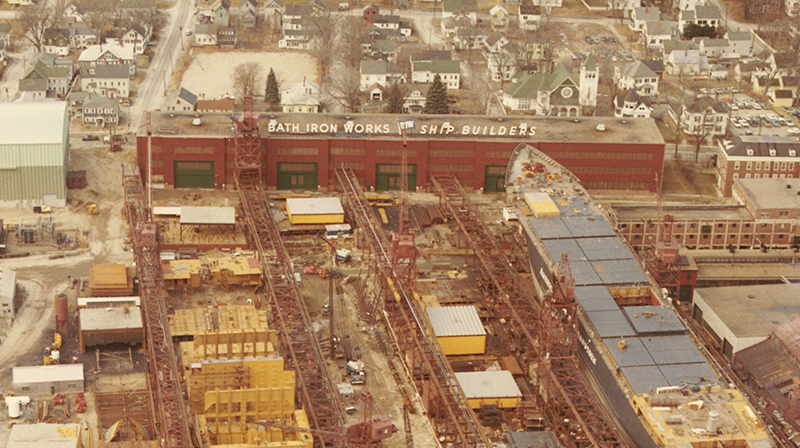
In the 1970s, in an effort to modernize the shipyard, engineers and production employees were dispatched to Europe and Japan to look for ideas in the latest methods of ship…

-
Keyes Fibre Company
After WWI, there was a slump in shipbuilding. BIW Ltd. went into bankruptcy and all tooling was sold at auction. Keyes Fibre Company of Waterville decided they wanted to produce…
-
Portland Repair Yard and Todd-BIW Yard
During Bath Iron Works’ rich history, we expanded to other areas of Southern Maine depending on our needs. During War World II, from 1940 to 1945, there were two Todd-BIW…
-
Harding Plant (Structural Fab)
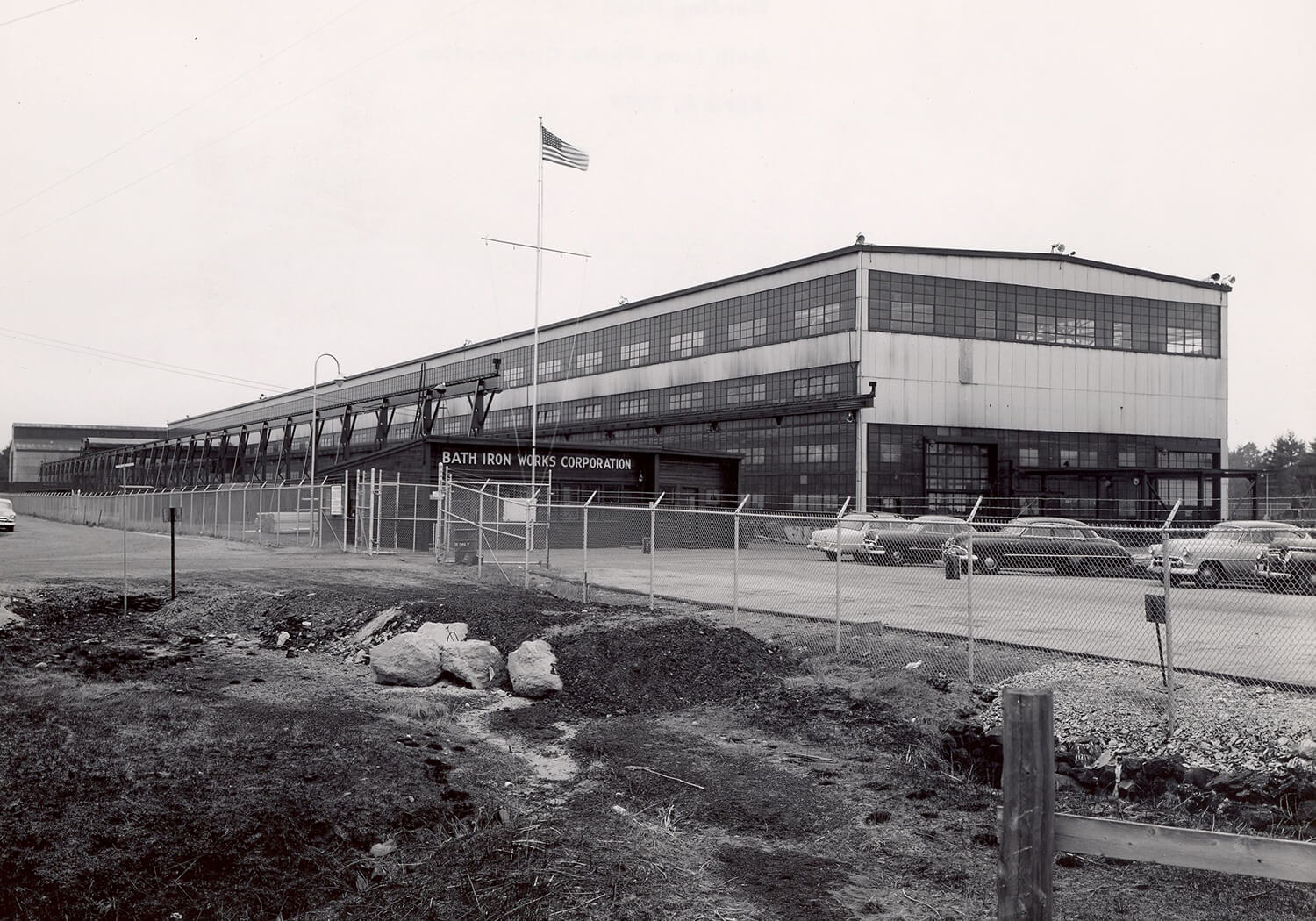
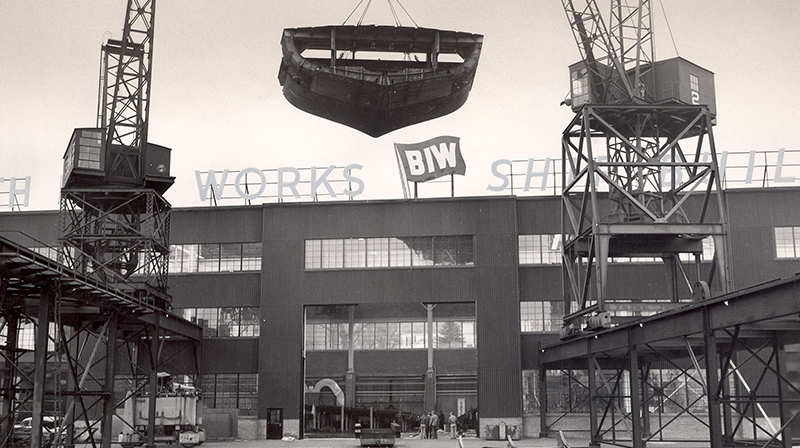
Originally called the Harding Plant, the Structural Fabrication Facility was built in 1940 after then-BIW President William S. “Pete” Newell received a telegram from Secretary of the Navy Frank Knox.…
-
Industrial Production
During the 1950s and 60s, Bath Iron Works looked to industrial production to fill in gaps in the shipbuilding schedule. Some of the jobs included fabricating submarine hull sections for…
-
Assembly Building is 161,840 square feet
Did you know, that the Assembly Building is 1,280 feet long and 131 feet wide, giving it a floor area of 161,840 square feet. That’s half again as big as…
-
Modern Era – 1982-2001
Portland Repair Yard
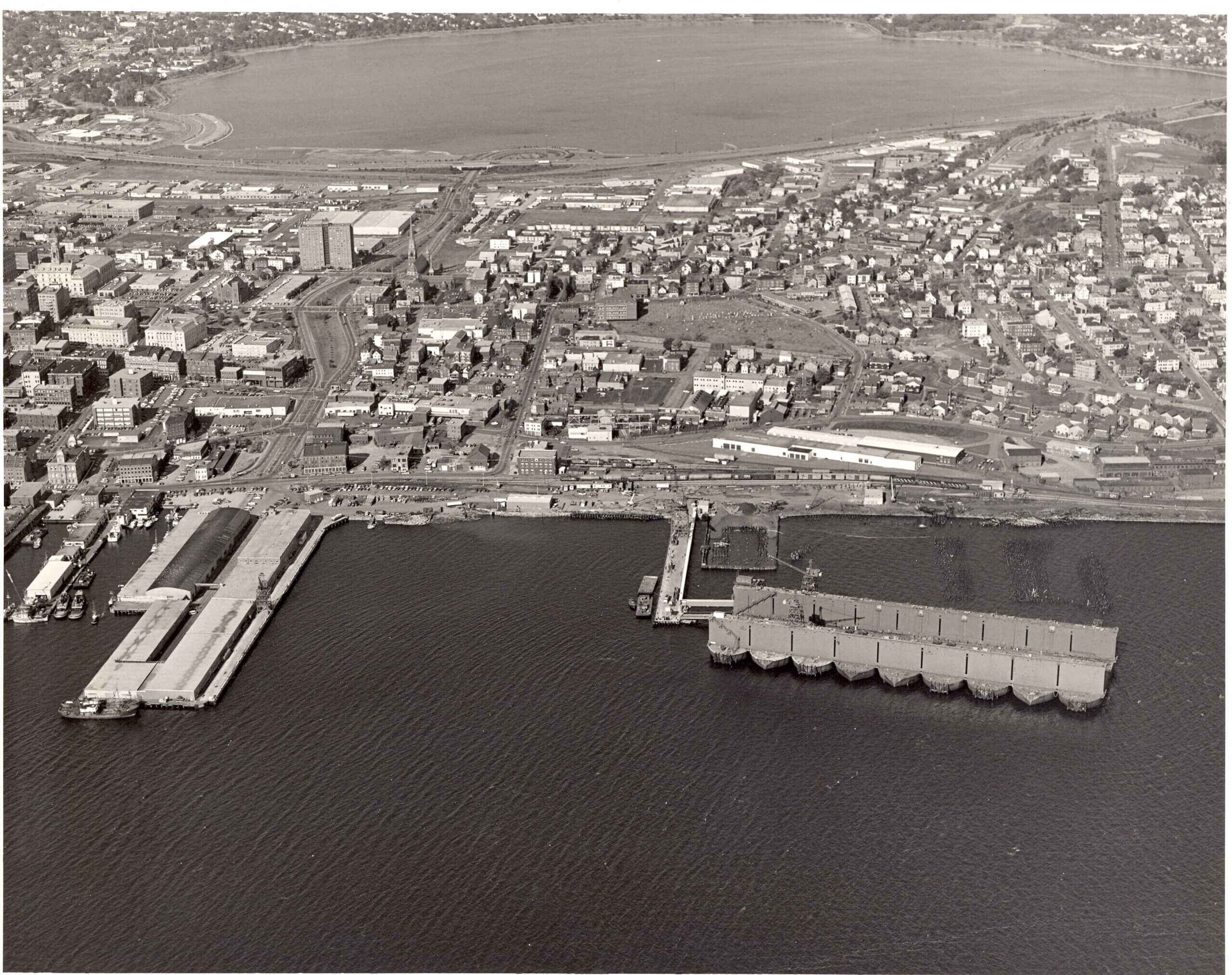
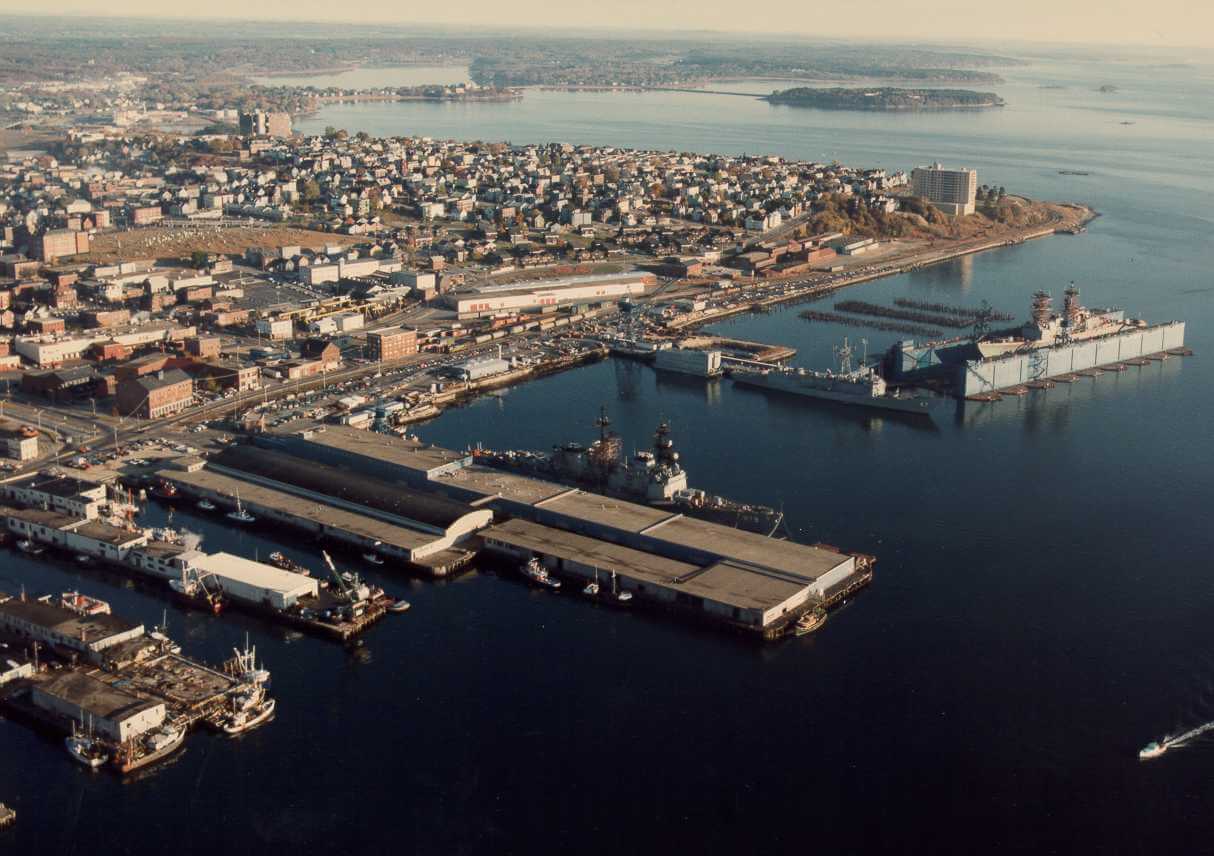
From 1982-2001, BIW leased the BIW Portland Repair Yard from the City of Portland. The Repair Yard came with a World War II era floating drydock. Nicknamed “the Hog,” the…
-
Outfit Fabrication Facility
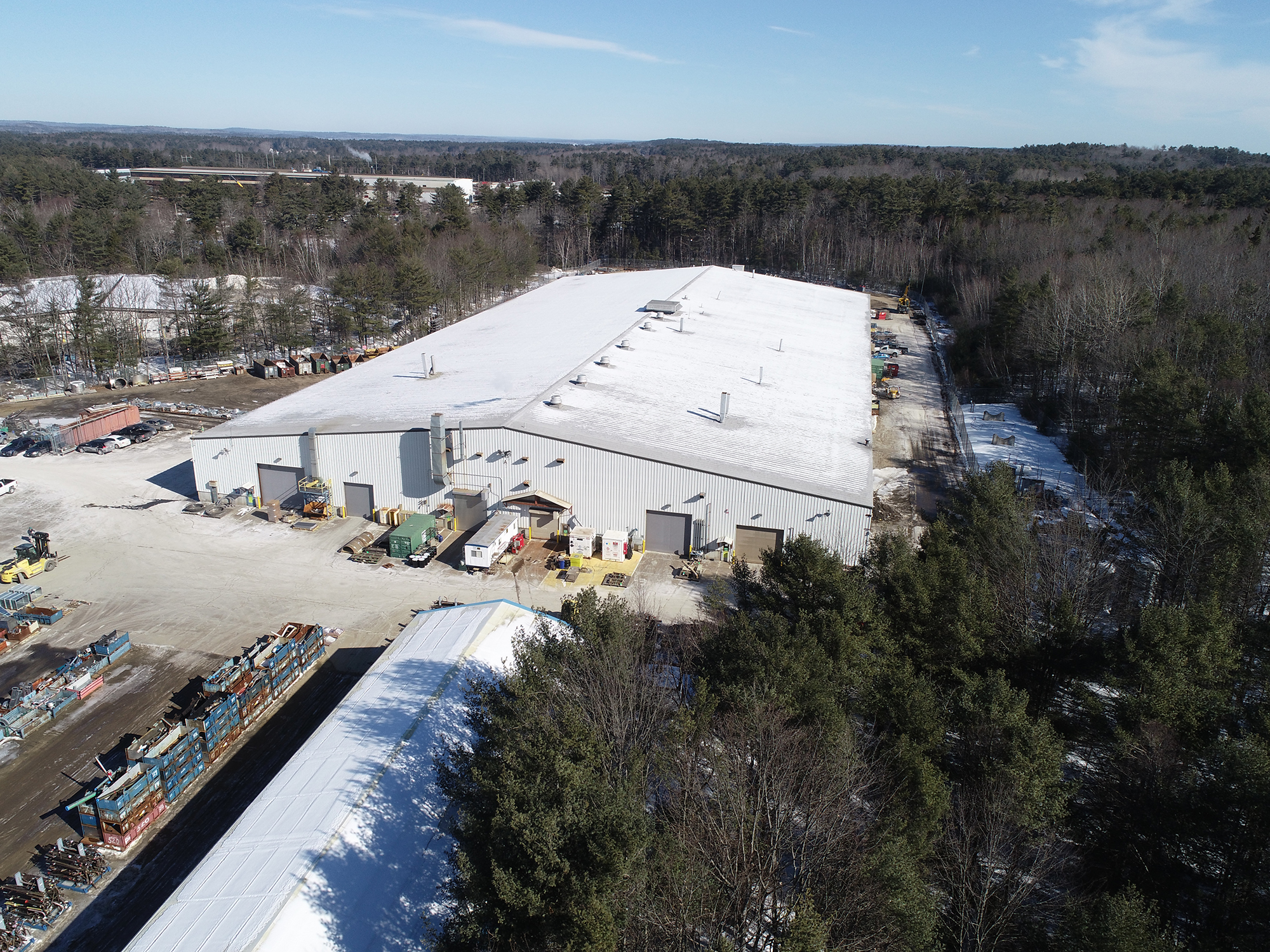
In 1989, the Pipe Shop and Tin Shop fabrication operations were moved from the main shipyard in Bath to the East Brunswick Manufacturing Facility (EBMF), now known as Outfit Fabrication.

-
Crane Lift
The heaviest crane lift recorded at the shipyard was more than 900 tons in 2012 when the complete DDG 1000 deckhouse was lifted with four cranes – two of them…
-
Water Street
The original location of the business that would eventually become Bath Iron Works was on Water Street, north of Centre Street, an area now occupied by the municipal parking lot…
-
Progressive Era
Baker’s Flavoring Extract Bottle
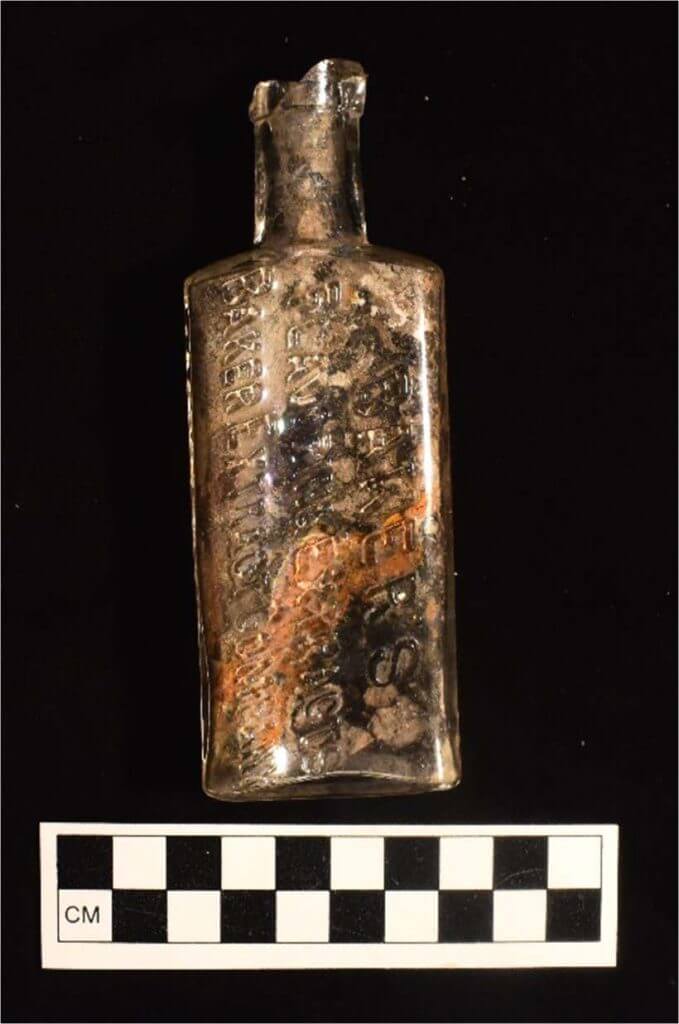
One of the many artifacts found while excavating for the Kitting Terminal was a Baker’s Flavoring Extract bottle, which was probably discarded sometime around 1900. Its manufacturer, the Baker Extract…
-
A Brief History of the Hardings Plant
As the prospect of war grew closer in 1940, BIW embarked on an ambitious shipyard expansion. The shipyard clearly needed more space, so a 15-acre site in East Brunswick, formerly…
-
-
-
-
Modern Era – 1971
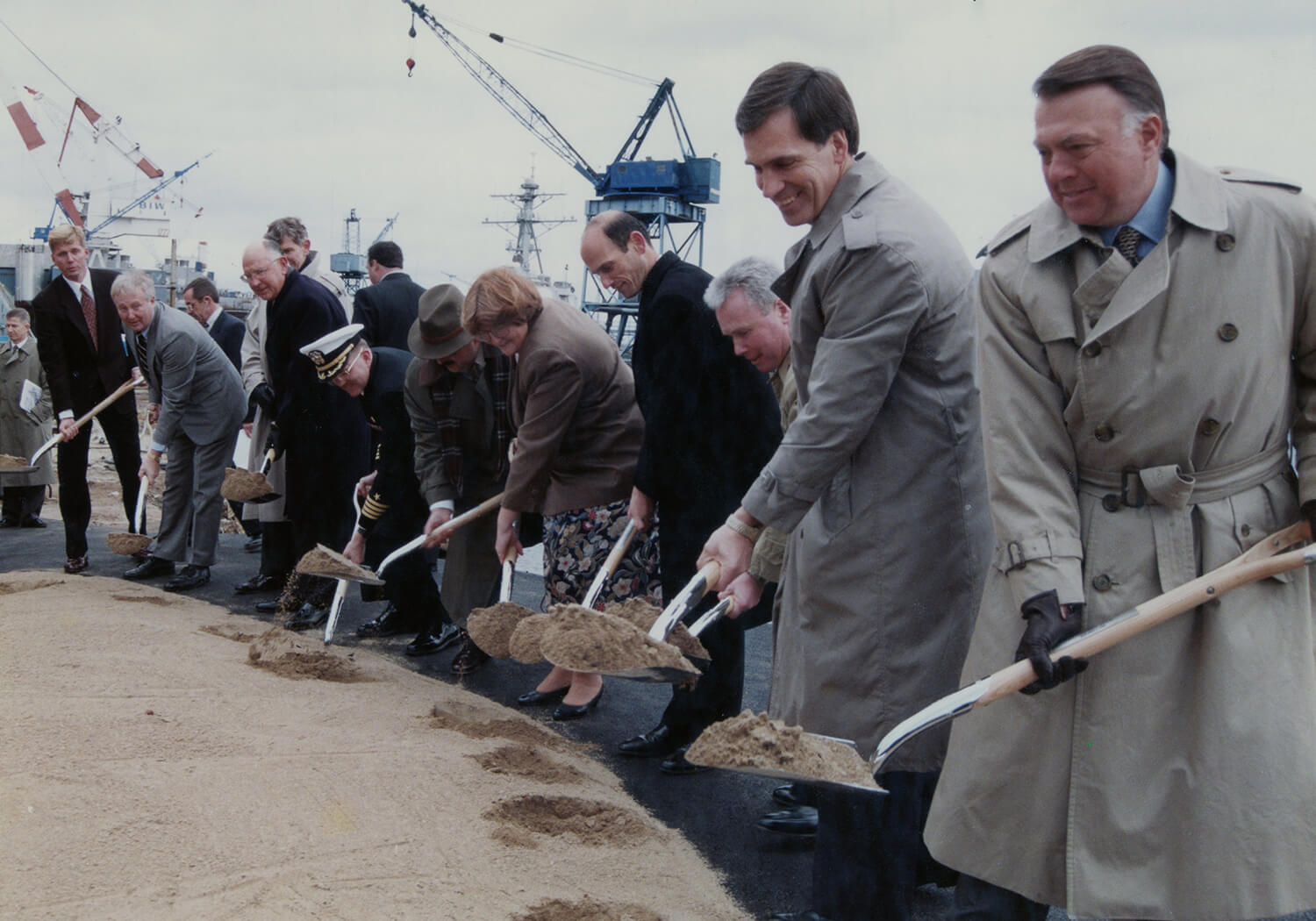
BIW completes first section of Main Assembly Building and installs 220-ton level-luffing No.11 Crane
220-ton level-luffing No. 11 Crane during construction.

-
-
Post War America – 1940
BIW Structural Fabrication Facility (Harding) is built in East Brunswick, ME